Introduction
The realm of retinal surgery has been revolutionized over the years due to technological advancements. From the introduction of safer and more precise tools to the development of innovative surgical techniques, the field has experienced substantial progression. This change has led to enhanced surgical outcomes, decreased patient discomfort, and a greater preservation of vision.
The landscape of retinal surgery continues to evolve, with new trends emerging and shaping the future of the field. This post will delve into the impact of technology on retinal surgery, highlighting key innovations and discussing future trends that promise to further revolutionize the discipline.
Building upon the foundation laid out in the introduction, it is essential to delve into the key players driving the advancements in retinal surgery. One such player is the development of robotic-assisted surgical systems, which have significantly enhanced precision and reduced invasiveness in procedures. These systems enable surgeons to perform delicate maneuvers with greater accuracy, ultimately leading to better patient outcomes. Additionally, the integration of artificial intelligence (AI) algorithms in retinal surgeries is a game-changer. AI can analyze vast amounts of data to assist surgeons in decision-making processes, improving diagnostic accuracy and treatment planning.
Technological Innovations in Retinal Surgery
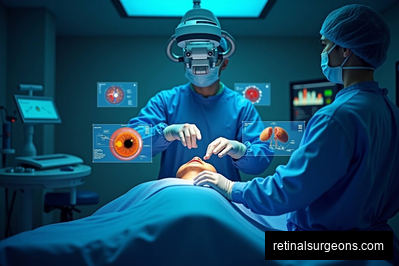
A key innovation in retinal surgery is the advent of intraoperative optical coherence tomography (i OCT). This powerful imaging technology provides real-time, high-resolution images of the retina during surgery, allowing surgeons to make precise, informed decisions. A study by Ehlers et al. (2014) demonstrated that i OCT significantly improved the surgical outcomes of patients with macular holes, leading to better visual results.
Another groundbreaking innovation is the development of microincision vitrectomy surgery (MIVS). MIVS entails making tiny incisions in the eye, resulting in less trauma and faster postoperative recovery. Furthermore, MIVS has been enhanced by the advent of 27-gauge vitrectomy, which allows for even smaller incisions and greater precision. This technique has been proven to cause less inflammation, less postoperative discomfort, and quicker visual recovery, according to a study by Khan et al. (2016).
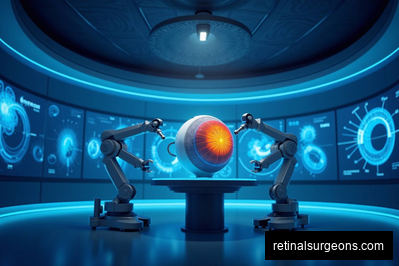
In addition to i OCT, another groundbreaking advancement in retinal surgery is the integration of robotics. Robotic-assisted retinal surgery offers unparalleled precision and control, allowing surgeons to perform delicate procedures with enhanced accuracy. These robotic systems are equipped with specialized tools and cameras that provide real-time feedback, enabling surgeons to navigate complex retinal structures with confidence. For example, the NGENUITY 3D Visualization System combines high-definition imaging with augmented reality technology, revolutionizing how surgeons visualize and manipulate the retina during surgery.
Robotics in Retinal Surgery
Robotics is another technological advancement that has made its mark on retinal surgery. Robotic systems, such as the Preceyes Surgical System, offer unparalleled precision and stability during delicate retinal procedures. These systems can filter out surgeon's hand tremors, allowing for superior accuracy during critical stages of retinal surgery.
In 2016, De Smet et al. conducted the first-ever robot-assisted retinal vein occlusion surgery using the Preceyes system. The operation was successful, showcasing the potential of robotics in retinal surgery. Despite the high costs associated with these systems, the benefits of improved surgical outcomes and reduced surgical complications may outweigh the expenses in the long run.
When delving deeper into the realm of robotics in retinal surgery, one cannot overlook the game-changing role of robotic-assisted vitrectomy systems. These advanced systems offer unparalleled precision and dexterity, allowing surgeons to perform delicate maneuvers with enhanced control and accuracy. For instance, the use of robotic platforms like the da Vinci Surgical System has revolutionized procedures such as membrane peeling and retinal detachment repair. Surgeons can now navigate intricate retinal structures with greater ease, leading to improved surgical outcomes and reduced risks for patients.
Furthermore, the integration of artificial intelligence (AI) algorithms in robotic retinal surgery is paving the way for predictive analytics and personalized treatment plans. AI-powered robotic systems can analyze real-time data during surgery, assisting surgeons in making informed decisions and optimizing surgical techniques. By harnessing the combined power of robotics and AI, retinal surgeons are venturing into a new era of precision medicine, where tailored interventions and improved patient care are at the forefront of innovation.
Artificial Intelligence and Virtual Reality
Artificial intelligence (AI) and virtual reality (VR) are emerging technologies with significant potential in retinal surgery. AI can be utilized to analyze vast amounts of data, facilitating early detection of retinal conditions and tailoring individual treatment plans. Google's Deep Mind Health, for instance, can analyze retinal scans with 94% accuracy, potentially assisting in early detection of diseases like age-related macular degeneration and diabetic retinopathy.
VR, on the other hand, can be used as a training tool for surgeons. Platforms like the Eyesi Surgical Simulator provide realistic, high-resolution simulations of retinal procedures, allowing surgeons to practice and improve their skills in a risk-free environment. Although VR is still a nascent technology in retinal surgery, its potential to enhance surgical training and patient education is immense.
Artificial intelligence (AI) and virtual reality (VR) are not only revolutionizing the way we interact with technology but also transforming the healthcare industry. In the field of medicine, AI is being utilized to analyze vast amounts of medical data to predict patient outcomes and personalize treatment plans. When integrated with VR technology, this data-driven approach can enhance medical training by offering immersive simulations for surgical procedures or patient consultations.
Furthermore, the synergy between AI and VR is paving the way for advanced applications in the gaming industry. Game developers are leveraging AI algorithms to create more realistic and adaptive gameplay experiences within virtual environments. Imagine a VR game where AI-powered characters dynamically respond to a player's actions, providing a truly personalized and engaging gaming adventure. As these technologies continue to evolve, the possibilities for AI and VR integration are endless, promising a future where immersive experiences and intelligent systems converge seamlessly.
Future Trends in Retinal Surgery
Looking ahead, the future of retinal surgery is promising, with several exciting trends on the horizon. One such trend is the development of bioengineered retinas, which could replace damaged retinal tissue and restore vision. Scientists at the RIKEN Center for Developmental Biology in Japan successfully transplanted lab-grown retinal tissue into animals in 2016, marking a significant step in this direction.
Another upcoming trend is the use of nanotechnology in retinal surgery. Nanoparticles can be utilized to deliver drugs directly to the retina, enhancing the efficacy of treatment and reducing side effects. A study by Kim et al. (2017) showed that nanoparticles loaded with anti-VEGF drugs could effectively treat wet age-related macular degeneration, paving the way for future applications of nanotechnology in retinal surgery.
Looking ahead, the future of retinal surgery is indeed marked by remarkable advancements that hold great potential for improving patient outcomes. One notable trend that is gaining momentum is the integration of artificial intelligence (AI) in surgical procedures. AI-powered systems can assist surgeons in analyzing complex imaging data, enhancing precision during delicate retinal surgeries. Additionally, the development of innovative surgical tools, such as micro-robotics and nanotechnology, is revolutionizing the field by enabling minimally invasive procedures with improved accuracy and reduced recovery times. These cutting-edge technologies are paving the way for more personalized and effective treatment strategies tailored to each patient's unique retinal condition.
Conclusion
In conclusion, technology has significantly impacted retinal surgery, introducing new tools and techniques that have revolutionized the field. Innovations such as i OCT, MIVS, robotics, AI, and VR have enhanced surgical outcomes, improved patient care, and shaped the course of retinal surgery. Looking forward, trends like bioengineered retinas and nanotechnology promise to further transform the field, offering new possibilities for the restoration of vision.
While these advancements bring exciting opportunities, they also come with challenges, such as cost, accessibility, and the need for continued research and development. However, with ongoing investment in technology and a commitment towards innovation, the future of retinal surgery looks bright, promising better vision for patients and greater capabilities for surgeons.
This conclusion marks a pivotal moment in the discussion on the impact of technology in retinal surgery. Looking ahead, the evolution of artificial intelligence (AI) and robotics continues to revolutionize surgical precision and outcomes in ophthalmology. For instance, AI-powered imaging systems now assist surgeons in real-time decision-making during complex procedures, enhancing accuracy and reducing risks. Moreover, the integration of virtual reality (VR) platforms enables trainee surgeons to simulate surgeries in a controlled environment, fostering skill development and proficiency before operating on actual patients.
As we reflect on the advancements highlighted in this discussion, it becomes evident that the future of retinal surgery is intricately intertwined with cutting-edge technologies. The conclusion drawn is not merely the end of a discourse but rather a call to embrace innovation and adaptability in the ever-evolving landscape of ophthalmic care. By leveraging these technological tools judiciously, surgeons can navigate complexities with greater confidence, ultimately translating into improved patient outcomes and enhanced quality of care.